Busy Bees in Spring: What You Need to Know (and When to Call the Experts)

Updated: May 18
As we move into spring, you may start noticing more bee activity around your home or business. Warmer temperatures trigger one of the busiest periods in the bee calendar—so if it suddenly feels like they’re everywhere, you’re not imagining it.
Great to see lots of bees already! At PGM Pest Control we’re pleased to be seeing lots of different variety of bees already – buzzing around the flowers and pollinating like mad. And we reckon our local farmers deserve a big pat on the back for reducing the use of damaging crop sprays.
They’ve been doing their bit for our great Herefordshire countryside. And let’s not forget about the conscientious pest controllers among us who are taking steps to look after our precious bee population and avoiding unnecessary pest treatments.
At PGM you know WE LOVE our BEES!
But we also understand that they can be hazardous at times and if there’s a public health risk we’ll always address the problem.
At PGM Pest Control, we regularly receive calls at this time of year from concerned customers unsure whether they’re dealing with a problem or simply seasonal activity.
This guide will help you understand what’s normal, what isn’t, and when to take action.
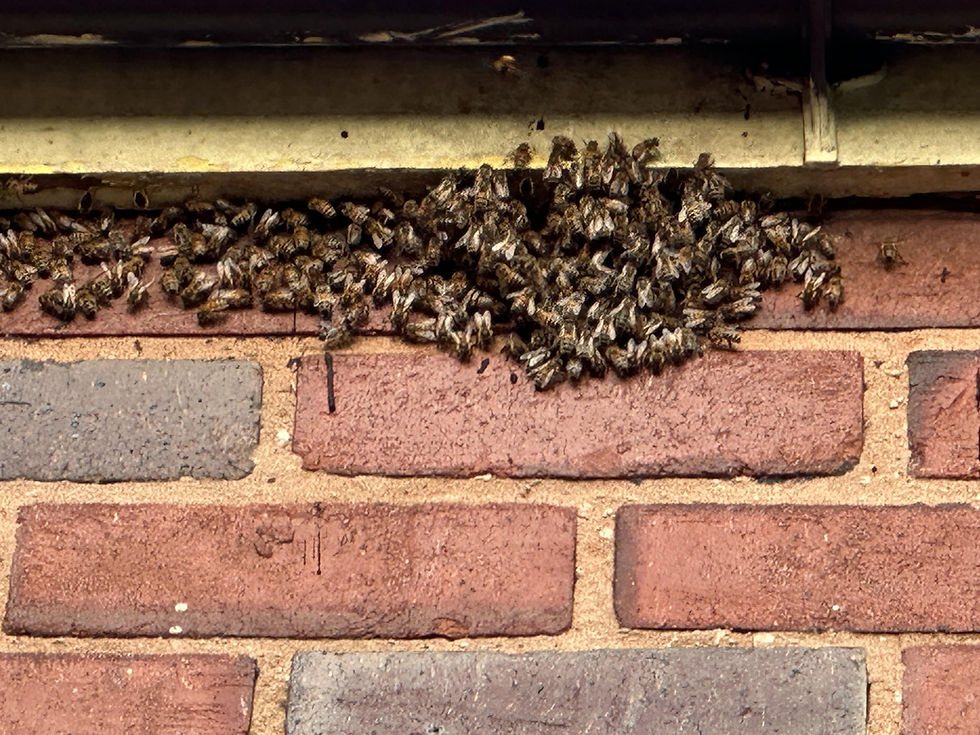
Bee swarm relocation of honey bees nestled on a school gate in Bromsgrove Worcestershire by PGM pest PGM and Son, image of a swarm honeybees nestled on a tree in Bromyard Herefordshire, we relocated th Gooden's nomad bee
Why Are Bees So Active Right Now?
Spring marks the start of the bee season. Colonies that have survived the winter begin expanding rapidly as food sources return.
During this period:
Queens begin laying eggs again
Worker bees leave the hive to forage
Colonies grow quickly in size
Swarming season begins (typically from April onwards)
In short, bees are doing exactly what they’re supposed to do—working hard to rebuild and thrive.
Understanding the Different Types of Bees
Not all bees behave the same way, and knowing the difference can help you decide whether there’s a genuine issue.
Live in large colonies
Often associated with swarms
Usually non-aggressive unless provoked
Larger and fuzzier in appearance
Nest in smaller groups, often in the ground
Generally very docile
Do not form colonies
Nest individually in soil, wood, or walls
Pose virtually no risk
In many cases, what appears to be a “problem” is actually harmless activity.
Swarms: Impressive, but Usually Not Dangerous
One of the most common concerns we see in spring is swarming.
A swarm occurs when:
A colony becomes too large
The queen leaves with part of the workforce
Bees temporarily cluster while finding a new home
While this can look alarming, swarms are typically:
Temporary (often moving on within 24–48 hours)
Focused on relocation, not aggression
Unlikely to sting unless disturbed
Are Bees Dangerous?
In most situations, bees are not a threat.
However, there are exceptions:
If a nest is located inside a property (walls, lofts, chimneys)
If someone nearby has a bee sting allergy
If bees are being disturbed regularly
It’s important to balance caution with understanding—bees are vital to the environment and should not be treated as pests unless necessary.
What to Do If You Find a Bees Nest
If you discover a nest on your property, the best course of action depends on the situation.
In most cases:
Leave it undisturbed
Keep a safe distance
Monitor activity
Do NOT:
Attempt to spray or poison the nest
Block entrances
Disturb the structure
When to take action:
Bees are entering your home
The nest is in a high-traffic area
There is a health risk
At that point, it’s time to speak to professionals.
Our Approach: Responsible Bee Management
At PGM Pest Control, we take a measured and responsible approach to bees.
Whenever possible, we:
Avoid unnecessary treatment
Recommend monitoring or natural relocation
Work with trusted contacts where appropriate
Bee removal is only considered when:
There is a genuine risk to people or property
The nest is established in a problematic location
Bees vs Wasps: Know the Difference
It’s easy to confuse bees with wasps, but they behave very differently. The difference between Bees, Wasps and Hornets >
Bees:
Hairy, rounder bodies
Focused on pollination
Less aggressive
Wasps:
Smooth, slender bodies
More aggressive, especially late summer
More likely to sting repeatedly
If you’re unsure what you’re dealing with, we can help identify the issue quickly.
Signs You May Have a Problem
Most bee activity is harmless—but keep an eye out for:
Consistent traffic entering a specific hole or gap
Buzzing inside walls or ceilings
Honey staining or residue indoors
Increasing numbers over time
These may indicate a nest within the structure of your property.
Protecting Your Property (and the Bees)
Prevention is always better than cure.
Simple steps include:
Sealing gaps in walls and rooflines
Maintaining vents and chimneys
Avoiding DIY chemical treatments
Encouraging bee-friendly areas away from your home
Seeing more bees at this time of year is completely normal—and in many ways, a positive sign of a healthy environment.
That said, if their activity starts affecting your home or business, it’s important to handle the situation correctly.
Need Advice or Assistance?
If you’re unsure whether you have a problem or just seasonal activity, we’re here to help.
PGM Pest Control offers:
Honest advice
Safe, responsible solutions
Fast response when needed
Get in touch today for expert guidance and peace of mind.
So if you have a bee problem you need help with, give PGM & Son Pest Control a call so we can discuss a range of solutions with you, which enable us to live in harmony with our friends the bees. Email us at contact@pgmpestcontrol.co.uk or call us on 01981 540088.
For free pest control advice on bees use the PGM AI Pest Assist on the right hand side of your screen for advice, support and guidance.
Find a Local Swarm Collector
If you spot a swarm of bees on your property, the safest approach is to contact a local swarm collector. These trained volunteers and beekeepers can safely relocate the bees without harming them.
Swarm collectors are often free or low-cost and operate across Herefordshire and Worcestershire.
They know how to handle bees safely and can remove swarms from walls, gardens, or trees.
Using a collector helps protect the environment while keeping your home safe.
You can find local swarm collectors through:
The British Beekeepers Association (BBKA) website: https://www.bbka.org.uk/find-a-local-swarm-collector
Local beekeeping clubs in your area
Your PGM Pest Control team, who can advise on contacts and safe removal
Remember: do not attempt to remove a swarm yourself — this can be dangerous and stressful for the bees.
Frequently Asked Questions about Bees in Spring
What should I do if there is a swarm of bees in my garden right now?
If you see a cluster of thousands of bees hanging together, that’s likely a honey bee swarm — a natural and usually harmless process as a colony relocates. Avoid disturbing it, keep children and pets away, and do not spray or attack the swarm. In many cases, local beekeepers or swarm collectors can safely remove and relocate these bees for free.
Can I attract a swarm away from my property?
There’s no guaranteed way to lure swarming bees off your property. Bees choose new sites based on scout bees’ assessment of suitability. The safest approach is to leave them undisturbed and contact a beekeeper or local swarm collector who may assist in relocation.
How early can bee swarms occur in the UK spring?
Bee swarming typically peaks May through July, but in warm years swarms can appear as early as late March or April. This year’s warmer weather means you might see activity earlier than usual.
Are there bees that dig nests in the ground and what do I do about that?
Yes — many solitary bees and bumblebees nest in bare soil. These ground nests are usually non-aggressive and beneficial; they rarely sting unless directly threatened. If it’s a solitary bee or bumblebee nest, the safest option is to leave them undisturbed while keeping children’s play areas clear.
Why are some bees coming into my house even when windows are closed?
Bees may enter buildings through gaps around chimneys, vents, or brickwork while looking for nesting sites or floral scents. They may appear inside walls or fireplaces. If you see this, it doesn’t always mean a full nest — but it can indicate bees have established a colony in a cavity, and it’s worth consulting a professional if it continues.
How can I tell if the insects I see are bees or something else like wasps or hornets?
Bees are generally fuzzier with rounded bodies, while wasps are smooth and slender with bright yellow/black stripes. Newly invasive Asian hornets (yellow-legged hornets) are also a growing concern in the UK and should be reported if spotted, as they can threaten native bees.