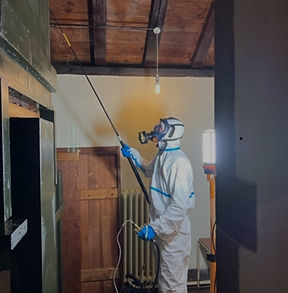
Office Pest Control: Your Legal Duties, the Risks, and How to Stay Protected

Most pest problems are caused by the same handful of pests, and most pest problems are entirely preventable. But in an office, the stakes are different to a home. A mouse in your kitchen is a household chore.
A mouse in your server room, or a cockroach spotted by a client in reception, can become a legal, financial and reputational problem within hours.
This guide covers what every office manager, facilities lead, or business owner in Herefordshire and Worcestershire needs to know: your legal responsibilities, the pests most likely to target your premises, what happens if you ignore the warning signs, and the practical steps that keep your office pest-free year-round.
Do Offices Have a Legal Duty to Control Pests?
Yes — and the duty applies whether or not you run a food business. Under the Health and Safety at Work etc. Act 1974, every employer has a general duty to protect the health, safety and welfare of staff. A pest infestation that's left unaddressed can breach that duty outright.
The Workplace (Health, Safety and Welfare) Regulations 1992 go further, requiring that workplaces are kept clean and that waste doesn't accumulate — exactly the conditions that invite pests in the first place.
If your office has a kitchen, canteen or food storage area, the Food Safety Act 1990 and food hygiene regulations also apply, and the bar for "due diligence" is higher.
A few practical points worth knowing:
Employees can raise pest concerns formally, and employers are obliged to investigate and act. Ignoring a reported issue isn't just bad practice — it's a potential health and safety breach.
The Health and Safety Executive (HSE) can take enforcement action where risks to staff aren't managed, including improvement notices in serious cases.
Lease terms matter. In most full repairing and insuring (FRI) leases, the tenant — not the landlord — is responsible for pest control within their own demised premises. Always check your lease before assuming it's someone else's problem.
Insurance can be conditional on pest management. Many commercial policies expect documented, routine pest control as a condition of cover, not just a reactive call-out when something's spotted.
None of this means every office needs a permanent contract by law. It does mean you need a system: regular checks, prompt action, and a record of what you did and when — exactly what a structured Integrated Pest Management programme is built to provide.
How Pest Infestations Impact Office Businesses
The knock-on effects go well beyond "it's a bit gross":
Staff morale and retention. Nobody wants to work somewhere with a known pest problem, and it shows up in complaints and sickness absence.
Physical damage. Rodents in particular chew through cables, pipes and insulation — costly to repair and, in server rooms or comms cupboards, potentially catastrophic for business continuity.
Forced closures. Some treatments require temporarily vacating an area, disrupting operations and client-facing work.
Reputational damage. A pest sighting by a client, visitor, or member of the public spreads fast, especially if it ends up on a review site or local news.
Disputes with neighbouring businesses. In shared or multi-occupancy buildings, an unmanaged infestation can spread through risers, voids and shared walls, creating disputes with the businesses next door.
Lease and insurance breaches. Landlords can pursue tenants who are deemed to have caused or failed to prevent an infestation, and as above, insurers may decline claims if pest management wasn't documented.
The Pests Most Likely to Target Your Office
Different pests are drawn to different parts of an office building, which is why a one-size-fits-all approach rarely works.
Rodents (rats and mice)
Are the most common and most costly office pest. They're drawn to warmth, food waste, and the cover provided by server rooms, suspended ceilings, and riser cupboards — and they'll chew cabling as readily as packaging. See our rat and rodent removal service for how we deal with an active infestation.
Ants
Are usually a kitchenette and breakroom problem, drawn in by spilled drinks, crumbs and unsealed bins. They're more of a nuisance than a health risk, but a visible trail in a client-facing area still looks bad. Full detail on our ant control page.
Flies
Breed wherever organic waste sits too long — bins, drains, and food storage areas are the usual culprits. Beyond the nuisance factor, flies are a genuine contamination risk anywhere food is prepared or eaten. See fly control.
Cockroaches
Are less common in UK offices than the other entries on this list, but when they do appear it's almost always linked to warmth, moisture and food residue — server rooms, kitchens, and areas near pipework are typical harbourage points.
Both German and Oriental cockroach species are found in commercial premises in the UK, and infestations escalate quickly because of how fast they breed. Full guidance on our cockroach control page.
Bed Bugs
Are an increasingly common office concern, particularly in hot-desking environments, on soft seating in breakout areas, and wherever staff or visitor bags and coats are routinely left. See bed bug control.
Wasps
Target eaves, signage voids, loading bays and external stores, particularly through spring and summer. A nest near a fire exit or staff entrance is a genuine safety hazard, not just an inconvenience. See wasp nest removal.
Birds
Particularly pigeons and gulls, are a building-exterior issue rather than an interior one — fouling, nesting in roof voids and HVAC units, and blocked guttering are the most common complaints from office landlords and facilities teams. Our Advanced Bird Management service covers proofing and deterrent options.

Practical Tips for Office Pest Prevention
Most of this comes down to removing what pests need: food, water, warmth and harbourage.
Clean kitchen and breakout areas properly and frequently. Encourage staff to clear spills, crumbs, and leftover food and drink promptly rather than leaving it overnight.
Manage your bins. Make sure internal bins are emptied regularly, external bins are collected on schedule, and all bins have tight-fitting lids. Pest-proof external bins are worth the investment for any office with food waste.
Introduce a clear desk policy. With most work now digital, there's little excuse for food wrappers or crumbs building up at individual desks.
Pest-proof the building fabric. Block holes and seal gaps, paying particular attention to window frames, doors, pipework and air vents. Fix leaks promptly — pests need water as much as food.
Train staff to spot the signs. Maintenance teams should actively check for access points and harbourage. Cleaning staff and general employees should know to report droppings, unusual smells, or insects on office plants.
Maintain the external perimeter. Keep shrubs and trees cut back and away from the building, clear leaf piles promptly, and keep window and door frames clean and unobstructed.
For larger or harder-to-access commercial roofs, a drone inspection survey can identify bird activity, roof damage and potential entry points without the cost or risk of scaffolding.
How to Deal With an Office Pest Problem
First: don't panic, and don't let staff try to handle it themselves. DIY pest control in a commercial setting carries health and safety risks for the person attempting it and can make an infestation worse.
Make sure your team knows to report any sighting immediately, then call in a professional. A BPCA-accredited pest controller has access to products and methods that aren't available to the public, and the training to use them safely and effectively — which also matters for the due diligence record discussed earlier.
For all your office pest control needs across Herefordshire and Worcestershire, call PGM & Son Pest Control Services on 01981 540088 (office hours) or 07964 370480 (24/7 emergency call-outs) for a free, no-obligation chat. You can also email contact@pgmpestcontrol.co.uk or use the live chat on our website.
Frequently Asked Questions
Is pest control a legal requirement for offices in the UK?
There's no blanket legal requirement to hold a pest control contract, but employers have a clear duty under health and safety law to keep the workplace free of risks — which in practice means having a system to prevent, detect and deal with pests promptly.
What's the most common pest found in UK offices?
Rodents — rats and mice — are consistently the most reported office pest, largely because they're drawn to the warmth, food sources and cable runs typical of commercial buildings.
Who's responsible for pest control, the landlord or the tenant?
It depends on the lease. In most full repairing and insuring (FRI) leases, the tenant is responsible for pest control within their own demised space, while the landlord typically covers communal areas and the building exterior. Always check the specific terms of your lease.
How often should an office have a pest inspection?
This depends on the size, location and risk profile of the premises, but a structured Integrated Pest Management programme with regular scheduled visits is the most reliable way to catch problems early and maintain a due diligence record.