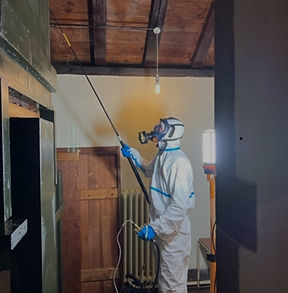
What Is Integrated Pest Management?

Table of Contents
What Is Integrated Pest Management (IPM)?
Integrated Pest Management, commonly known as IPM, is a structured approach to preventing, monitoring and controlling pests using the most appropriate combination of methods.
Rather than relying automatically on pesticides, IPM considers the pest species, level of activity, building or environment, access points, food and water sources, harbourage and potential risks before deciding what action is required.
The principle is straightforward:
Prevent → Monitor → Identify → Assess → Control → Review
An effective Integrated Pest Management programme aims to achieve reliable pest control while reducing unnecessary pesticide use and minimising risks to people, animals, non-target species and the wider environment.
What does Integrated Pest Management mean?
Integrated Pest Management brings together different methods of pest prevention and control rather than relying on one treatment alone.
In professional pest management, this can include:
Inspection and monitoring
Pest identification
Proofing and exclusion
Hygiene and housekeeping
Waste management
Habitat and harbourage reduction
Trapping and physical controls
Biological controls where appropriate
Targeted insecticide or rodenticide treatments
Ongoing monitoring and review
At PGM Pest Control we describe IPM as combining biological, cultural, physical and chemical tools in a way that minimises economic, health and environmental risks.
The important word is integrated.
No single control method is suitable for every infestation. Professional pest management requires an understanding of the pest, why it is present and what needs to change to achieve effective long-term control.
Does Integrated Pest Management mean pesticide-free pest control?
No. Integrated Pest Management is sometimes incorrectly described as chemical-free pest control. That is not what IPM means.
Pesticides remain an important pest management tool and may be necessary where pest activity presents a risk to public health, food safety, property or the environment.
The purpose of IPM is to ensure their use is justified, appropriate and targeted, while also addressing the conditions that allowed the pest problem to develop.
This may mean combining an insecticide, rodenticide or other authorised treatment with proofing, hygiene improvements, trapping, environmental management and continued monitoring.
The UK Government describes IPM as a holistic approach that keeps conventional pesticide use to levels that are ecologically and economically justified while minimising risks to human health and the environment.
What are the main principles of Integrated Pest Management?
1. Prevention
Where possible, pest problems should be prevented before an infestation becomes established.
In homes and buildings, preventative measures may include:
Sealing gaps and pest entry point
Installing suitable pest-proofing
Protecting drains and service penetrations
Managing waste correctly
Improving food storage
Removing standing water and moisture
Reducing clutter and potential harbourage
Maintaining buildings and external areas
Improving cleaning and hygiene practices
Prevention addresses the environmental conditions pests require to enter, feed, breed and survive. A treatment may remove an existing infestation, but if the underlying cause remains, pest activity can return.
2. Inspection and monitoring
Effective pest management begins with evidence. Monitoring helps establish:
Whether a pest is present
Which species is involved
Where activity is concentrated
How pests are entering
Where they are feeding or harbouring
Whether activity is increasing or decreasing
Whether control measures are working
Depending on the pest and environment, technicians may use visual inspections, monitoring traps, non-toxic monitoring blocks, insect monitors, pheromone traps, cameras or electronic monitoring systems.
PGM Pest Control identifies monitoring as one of the most important elements of an IPM strategy because it provides the evidence needed to make informed pest management decisions.
Monitoring should not necessarily stop when treatment begins.
Continued monitoring helps determine whether control has been successful and provides early warning if pest activity returns.
3. Accurate pest identification
Correct identification is fundamental to professional pest management. Different pest species have different:
Life cycles
Feeding habits
Breeding behaviour
Harbourage preferences
Movement patterns
Environmental requirements
Treatment requirements

A professional assessment therefore looks beyond simply establishing that there is “an insect” or “a rodent”.
For example, German cockroaches and Oriental cockroaches may require different investigation and control strategies. Similarly, identifying whether moth activity relates to clothing moths or stored-product moths can completely change where the source of an infestation should be investigated.
Accurate identification allows control measures to be directed at the correct pest and the conditions supporting it.
4. Assessing pest activity and risk
Finding evidence of a pest is only one part of the assessment. A technician must also consider:
How extensive is the activity?
Is there an established breeding population?
Where is the source?
Does the pest present a public-health risk?
Is food or stock at risk of contamination?
Could the pest damage the building or equipment?
Are vulnerable people present?
Could neighbouring properties be affected?
Is immediate intervention required?

The appropriate response will depend on both the pest and the environment.
A single pest sighting in one situation may justify monitoring. In another environment — particularly where rodents, cockroaches or other public-health pests are present — evidence of activity may require immediate action.
IPM is therefore risk-based as well as evidence-based.
What pest control methods are used in IPM?
A professional IPM programme can combine several different forms of control.
Physical and mechanical controls
Physical methods prevent pests from entering an environment or remove them without relying solely on pesticides.
These can include:
Building proofing
Drain protection
Trapping
Insect screens
Bird netting and exclusion systems
Electronic fly killers
Heat treatment
Vacuum removal
Removal of contaminated materials
Physical cleaning and decontamination
Proofing is particularly important because preventing access can remove the route through which an infestation repeatedly develops.
Environmental controls
Many pest problems are directly influenced by the surrounding environment.
Environmental management can include:
Removing accessible food
Improving waste management
Correcting poor food storage
Removing standing water
Reducing excessive moisture
Clearing harbourage
Improving cleaning
Managing vegetation
Repairing damaged structures
Improving stock rotation
PGM Pest Control describes measures such as removing attractants, blocking access and improving hygiene as central components of an IPM strategy.
Biological controls
Biological pest control uses living organisms or naturally occurring biological mechanisms to suppress pest populations. These techniques are particularly established within agriculture and horticulture but may have applications within other specialist pest management environments.
As with every IPM technique, suitability depends on the pest, environment and required level of control.
Chemical controls
Chemical controls can form an important part of Integrated Pest Management.
These may include appropriately authorised:
Insecticides
Rodenticides
Insecticidal gels
Baits
Dust formulations
Residual treatments
Other professional pest-control products
Their selection should be based on the target pest, treatment environment, level of risk and the product's authorised conditions of use.
Professional pesticide use should never simply replace investigation.
Where chemical control is required, it should form part of a wider pest management strategy wherever appropriate.
For professional rodent control, HSE specifically identifies Integrated Pest Management and a hierarchy of risk controls as principles underpinning UK rodenticide stewardship.
Why is monitoring important in Integrated Pest Management?
Monitoring turns pest control from assumption into evidence-led pest management.
It helps answer five important questions:
What is present?
Where is it active?
How much activity is there?
Why is it occurring?
Has the control programme worked?
Monitoring can identify pest entry points, harbourage, feeding areas, movement routes and environmental attractants.
It can also make treatment more targeted.
For example, understanding where rodents are moving through a building allows traps or other control measures to be positioned strategically rather than distributed without evidence of activity.

Following treatment, continued monitoring can confirm whether pest activity has stopped or whether further investigation is required.
What does Integrated Pest Management look like in practice?
Consider a property experiencing rat activity. A complete IPM programme would not simply involve placing rodenticide.
A professional assessment may involve:
Inspecting the property and surrounding environment
Confirming evidence of rat activity
Identifying access points, harbourage and possible nesting areas
Investigating drains and structural defects where appropriate
Assessing food, water and waste sources
Monitoring movement and activity
Introducing traps or targeted rodenticide where justified
Recommending proofing and environmental improvements
Monitoring the results
Reviewing the site and adapting the control programme
The immediate infestation is important, but so is understanding why rats gained access in the first place. Simply applying rodenticide without investigating access, food sources, harbourage or other contributing factors would not represent a complete Integrated Pest Management strategy.
Integrated Pest Management is an ongoing process
IPM should not be viewed as a single treatment. It is a continuing process:
Inspect → Identify → Assess → Prevent → Control → Monitor → Review → Adapt
The programme may change as pest activity changes.
A treatment that is appropriate during an established infestation may no longer be necessary once control has been achieved. Monitoring may then become the priority, supported by proofing and preventative measures.
Equally, new pest activity may require the strategy to be reassessed.
This is sometimes referred to as dynamic Integrated Pest Management — adapting pest management decisions according to changing evidence rather than following the same treatment programme indefinitely.
What are the benefits of Integrated Pest Management?
Reduces unnecessary pesticide use
Monitoring and investigation allow treatments to be used where they are required rather than automatically or routinely.
Addresses the cause of pest problems
Proofing, hygiene and environmental improvements can reduce the factors that allow pests to survive and reproduce.
Reduces risks to non-target species
More targeted pest-control measures can help limit unnecessary exposure of wildlife and other non-target organisms.
Supports responsible pesticide use
Over-reliance on individual pesticide products can contribute to pesticide resistance.
The UK Pesticides National Action Plan identifies increased uptake of IPM as an important part of reducing pesticide risks and managing resistance effectively.
Provides earlier warning of pest activity
Routine monitoring can identify developing activity before it becomes a significant infestation.
Provides evidence and documentation
For commercial environments, monitoring records and pest-management reports can provide an important record of activity, corrective actions and preventative recommendations.
Why is Integrated Pest Management important for businesses?
Pest management is particularly important in environments where an infestation could affect:
Public health
Food safety
Employees and customers
Stored products
Manufacturing processes
Buildings and equipment
Regulatory compliance
Business continuity
Reputation
Examples include:
Food manufacturing
Hospitality
Restaurants and catering
Healthcare
Schools
Warehousing and logistics
Retail
Manufacturing
Property management
For these environments, professional pest management should not begin only when an infestation becomes obvious.
Routine inspection, monitoring, proofing and hygiene recommendations can identify potential problems earlier and reduce the risk of pests becoming established.
PGM Pest Control describes preventative pest management to their customers as including routine inspections, monitoring, proofing, hygiene advice and ongoing services designed to identify risks before infestations develop.
What is the difference between reactive pest control and Integrated Pest Management?
Reactive pest control focuses primarily on dealing with an existing pest problem.
Integrated Pest Management looks at the wider picture.
It considers:
The pest — what species is present and how does it behave?
The building — how is it gaining access?
The environment — what is allowing it to survive?
The risk — what level of intervention is required?
The control options — which methods are most appropriate?
The outcome — has the programme worked?
The future risk — what can be changed to reduce recurrence?
Modern professional pest management increasingly combines reactive treatment with these preventative and monitoring principles.
Is Integrated Pest Management environmentally responsible?
IPM is designed to achieve effective pest management while reducing unnecessary risks to human health and the environment. This is achieved through measures such as prevention, monitoring, targeted treatments, environmental management and consideration of non-target species.
However, terms such as “chemical-free” and “pesticide-free” should not automatically be associated with IPM.
Effective pest management must still protect people, property, food and public health. The correct approach is to select the most appropriate intervention according to the evidence and level of risk.
Who should carry out Integrated Pest Management?
Effective IPM requires considerably more than applying a pest-control product.
Professional pest management requires an understanding of:
Pest identification
Pest biology and behaviour
Inspection techniques
Monitoring
Building proofing
Environmental management
Treatment methods
Pesticide safety
Risk assessment
Non-target species
Record keeping
Relevant legislation and industry standards
Professional users of biocidal products are expected to have received appropriate information, instruction and training for their use.
Choosing a competent professional pest controller helps ensure that pest management decisions are based on evidence, appropriate training and recognised industry standards.
Integrated Pest Management at PGM Pest Control
At PGM & Son Pest Control Services, Integrated Pest Management is based around five core principles:
Identify
Correctly identify the pest, signs of activity and extent of the infestation.
Investigate
Determine how pests are entering, where they are harbouring and what environmental conditions may be supporting the problem.
Prevent
Reduce access, food, water and harbourage wherever reasonably practicable.
Control
Select appropriate, targeted control measures according to the pest, environment and level of risk.
Monitor
Assess the results, identify continuing activity and adapt the pest management programme where required.
Our BPCA-accredited, RSPH-qualified technicians provide professional pest management for homes and businesses throughout Herefordshire and Worcestershire, combining technical knowledge, monitoring, prevention and targeted treatment to provide effective, responsible pest control. We encourage our customers to learn about pest prevention, contact us today for help, support and guidance, or speak to a human by calling us on 01981 540088.
Frequently Asked Questions
What does IPM stand for in pest control?
IPM stands for Integrated Pest Management. It is a structured approach that combines pest prevention, monitoring, identification and appropriate control methods rather than relying on one treatment method alone.
Does Integrated Pest Management use pesticides?
Yes, it can. IPM does not mean pesticide-free pest control. Insecticides, rodenticides and other authorised products may be used where appropriate, but their use should be justified, targeted and integrated with other pest-management measures.
What are the main principles of Integrated Pest Management?
The main principles are prevention, monitoring, accurate pest identification, risk assessment, appropriate control and continued review. The objective is to achieve effective pest management while reducing unnecessary intervention and risk.
What is an example of Integrated Pest Management?
For a mouse infestation, an IPM approach could combine inspection, monitoring, identifying entry points, improving food storage, sealing structural gaps, trapping or other appropriate control measures and follow-up monitoring to confirm that activity has stopped.
Why is monitoring important in IPM?
Monitoring provides evidence about the species present, location and extent of pest activity and whether control measures are working. It allows treatment decisions to be based on evidence rather than assumption.
Is Integrated Pest Management suitable for homes and businesses?
Yes. The principles of IPM can be applied to domestic and commercial pest problems. The scale and complexity of the programme will depend on the pest, property, level of activity and risks associated with the infestation.