Why Do Rats Avoid Traps? Understanding Rat Neophobia
If a trap or bait box has sat untouched for days, the rats haven't outsmarted you. They are being cautious, and that caution is a well-documented behaviour called neophobia. Understanding it explains why professional rat control is a managed programme rather than a single visit, and why the equipment your technician installs is best left exactly where it is.
Navigation
Are rats scared of new objects?
Yes, and for good reason. Rats survive by knowing their territory. They follow the same routes night after night, and anything new along those routes, such as a trap, a bait box or a monitoring device, is a potential threat until proven otherwise.
This is neophobia: a natural wariness of unfamiliar objects. It is a survival instinct, not a sign of a clever or unusually stubborn rat. Some rats ignore a new object for days or even weeks, while others approach cautiously and test it before returning.
Initial caution or learned avoidance?
Initial caution usually fades. Once a rat has investigated an object and come to no harm, it tends to accept it as part of the landscape. That is why pest control professionals often give equipment time to settle in before expecting results.
Learned avoidance is different. A rat that has had a bad experience with a trap or a bait point, or has watched others suffer one, can come to avoid it. Over time, populations that have been repeatedly exposed to the same approach can become harder to control.
Telling the two apart is a judgement call that needs experience and regular monitoring, which is one reason a treatment is reviewed rather than set and forgotten.
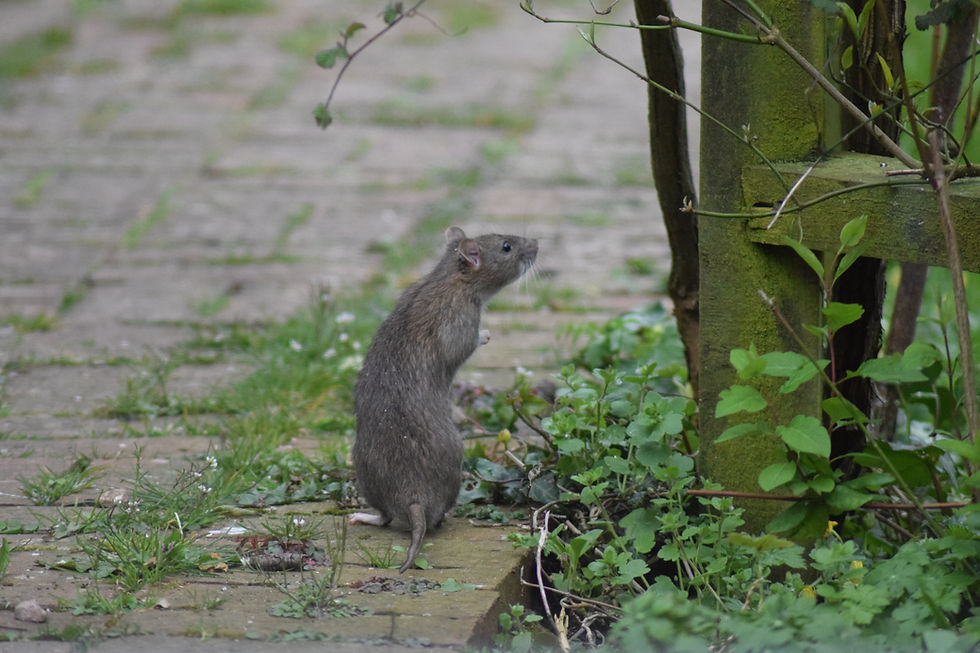
The most common rat species in the UK is the brown rat (Rattus norvegicus)
Why food and shelter work against control
A trap or bait point has to compete with everything else the rats already have. If there is easy food nearby, such as spilled bird seed, pet food left out overnight, open compost or uncovered bins, rats have no reason to take a risk on something unfamiliar.
The same goes for shelter. Clutter, overgrown vegetation, gaps under sheds and decking give them safe places to nest and feed without ever crossing open ground.
In winter the effect is stronger. Rats move closer to buildings for warmth and food, so a home with plenty of both can sustain an infestation even while control equipment sits right beside it. Removing food and harbourage is one of the most useful things a householder can do, and it makes professional treatment work faster.
Why moving or adding equipment can set things back
It is tempting to shift a trap to a spot that looks busier, or to add a few extra devices of your own. Each change puts something new into the rats' territory and can restart the cautious phase from the beginning.
A device that was nearly accepted becomes unfamiliar again, and a position chosen from evidence of rat movement is lost. Professional programmes work because equipment goes in deliberately, is left to settle, and is adjusted on the basis of what technicians see on each visit.
Frequent unplanned changes undo that groundwork
Why every property needs its own survey
No two rat problems look alike. Rats' routes, food sources, nesting spots and levels of wariness differ from one property to the next, and even between neighbouring gardens. A pest technician who surveys the site can see where rats are travelling, what they are feeding on and what is letting them in, then choose the approach and placement that suits that situation.
That is why a one-size-fits-all formula tends to fail. The right method on one property can be the wrong one on the next.
Please leave professional equipment alone
If your technician has installed bait boxes, traps or monitoring devices, please don't move, open, tamper with or add to them. Disturbing them can disrupt the programme, and the devices are secured for a reason: they must stay out of the reach of children, pets and wildlife.
Tell your technician if something has been knocked or damaged, and they will put it right
If you are worried that rats on your property are ignoring a trap, or you are seeing signs of activity in Herefordshire or Worcestershire this winter, get in touch with PGM & Son Pest Control on 01981 540088, email contact@pgmpestcontrol.co.uk. A survey will show what is drawing the rats in and what will work for your property.