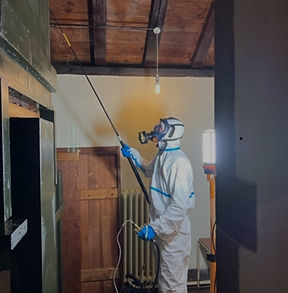
Pest Management Best Practice: Prevention, Compliance and Sustainability

Best Practice in Pest Management:
UK Legislation, Environmental Responsibility and Long-Term Prevention
Effective pest management extends far beyond eliminating pests. Whether you're responsible for a commercial premises, food manufacturing facility, warehouse or office building, a successful pest management programme should protect public health, comply with UK legislation and reduce the risk of future infestations.
Modern pest control professionals increasingly adopt a preventative approach, combining regular inspections, proofing, monitoring and targeted treatments to minimise pest activity while reducing unnecessary pesticide use.
This approach not only delivers more sustainable results but also helps organisations meet their legal and regulatory responsibilities.
Understanding Your Legal Responsibilities
Businesses have a legal duty to protect employees, customers and visitors from health risks associated with pest activity. While the exact requirements vary depending on the industry, pest management forms part of wider health, safety and food hygiene obligations.
For organisations handling food, preventing pest contamination is an essential component of food safety management. Pest activity can compromise hygiene standards, contaminate products and damage consumer confidence.
An effective pest management programme should include:
Routine inspections
Pest monitoring records
Corrective actions following pest sightings
Building maintenance and proofing
Waste management procedures
Staff awareness and reporting procedures
Keeping accurate documentation demonstrates due diligence and provides evidence that pest risks are being managed proactively.
Why Prevention Should Always Come First
The most cost-effective pest control strategy is preventing infestations from occurring in the first place.
Pests require three basic resources to survive:
Food
Water
Shelter
Removing or limiting access to these resources makes a property significantly less attractive to rodents, insects and birds.
Preventative measures include:
Prompt waste removal
Secure refuse storage
Repairing damaged brickwork and pipe penetrations
Installing door seals and fly screens
Maintaining drainage systems
Managing vegetation around buildings
Rotating stored stock
Regular deep cleaning programmes
These relatively simple actions can dramatically reduce pest pressure and minimise the need for reactive treatments.
Environmental Considerations in Modern Pest Control
Sustainability has become an increasingly important consideration within the pest management industry.
While pesticides remain an important tool, responsible pest management aims to use them only where necessary and as part of a wider Integrated Pest Management (IPM) programme.
Professional pest controllers seek to minimise environmental impact by:
Correctly identifying pest species before treatment
Selecting the least hazardous effective control method
Using targeted applications rather than routine blanket treatments
Monitoring treatment success before applying additional products
Protecting non-target wildlife wherever possible
Preventing pesticide contamination of watercourses and surrounding habitats
Balancing effective pest control with environmental responsibility supports biodiversity while maintaining high standards of public health protection.
Comparison Talbe: Reactive vs Preventative Pest Management
Reactive Approach | Preventative Approach |
Treats pests after they appear | Reduces the likelihood of infestations developing |
Often relies on repeated treatments | Focuses on proofing, hygiene and monitoring |
Can increase long-term costs | Reduces repeat infestations |
Greater disruption to business operations | Supports continuous compliance |
Managing Pesticide Resistance
One of the biggest challenges facing the pest management industry is pesticide resistance. Repeated exposure to the same active ingredients can allow resistant pest populations to survive and reproduce, gradually reducing treatment effectiveness.
Examples of resistance have been observed in several pest species, including certain rodents, bed bugs and cockroaches. Reducing the risk of resistance requires a strategic approach.
Best practice includes:
Correct pest identification
Using pesticides only when justified
Rotating active ingredients where appropriate
Combining chemical and non-chemical controls
Eliminating food, water and harbourage
Monitoring treatment outcomes
Integrated Pest Management plays a vital role by reducing reliance on chemical treatments and promoting long-term prevention.
Common Mistakes That Encourage Pest Activity
Many infestations develop because small maintenance or housekeeping issues remain unresolved. Some of the most common contributing factors include:
Common Issue | Potential Consequence |
Overflowing bins | Increased attraction for rodents and flies |
Gaps beneath external doors | Easy access for rodents and crawling insects |
Standing water | Breeding sites for flies and other insects |
Poor stock rotation | Increased risk of stored product pests |
Cluttered storage areas | Additional harbourage for pests |
Delayed reporting of pest sightings | Small infestations developing into larger problems |
Regular inspections help identify these issues before they become costly pest problems.

Supporting callouts:
Prevention is more cost-effective than repeated treatments.
Early detection reduces disruption.
Regular inspections support legal compliance.
Integrated Pest Management delivers sustainable results.
Frequently Asked Questions
What is the most effective pest control method?
There is no universal solution. The most effective approach depends on the pest species, the extent of the infestation and the environment. In many situations, a combination of proofing, monitoring, hygiene improvements and targeted treatment provides the best long-term outcome.
When should I contact a professional pest controller?
Professional assistance should be sought when pests present a health risk, infestations are widespread, repeated DIY treatments have failed or commercial premises require documented pest management.
Why do pests keep returning?
Recurring infestations usually indicate that the underlying cause has not been addressed. Accessible food, water, shelter or structural defects often allow pest populations to re-establish after treatment.
Can pest infestations be prevented?
Although no building is entirely immune to pests, regular inspections, good housekeeping, effective proofing and routine monitoring significantly reduce the likelihood of infestation.
Is pesticide use always necessary?
No. Many pest problems can be reduced through improved sanitation, proofing and habitat modification. Pesticides are generally most effective when used as one component of a wider Integrated Pest Management strategy.
What is Integrated Pest Management (IPM)?
Integrated Pest Management is a preventative, evidence-based approach that combines monitoring, inspection, proofing, environmental management and targeted treatments to achieve long-term pest control while minimising unnecessary pesticide use.
Effective pest management is built on prevention, not simply reaction. While chemical treatments continue to play an important role in controlling many infestations, the most successful programmes combine inspection, monitoring, proofing, sanitation and targeted interventions to deliver sustainable, long-term results.
By adopting an Integrated Pest Management approach, organisations can reduce pest risks, protect public health, support environmental sustainability and demonstrate compliance with recognised industry best practice.
Whether managing a commercial premises or protecting a domestic property, investing in preventative pest management today can significantly reduce the financial, operational and reputational costs associated with future infestations.