Pest Control Methods Explained: Choosing the Most Effective Solution for Every Pest

Pests pose a significant risk to homes, workplaces and commercial premises throughout the UK. Whether it's rodents contaminating food, insects damaging stock or birds creating health and safety hazards, choosing the right pest control method is essential for protecting people, property and business operations.
Effective pest management is about more than simply eliminating unwanted pests. The most successful strategies identify the source of an infestation, remove the conditions allowing pests to thrive and implement long-term preventative measures to reduce the risk of recurrence.
Modern pest control has evolved considerably over recent decades. Today's professionals increasingly adopt Integrated Pest Management (IPM), an evidence-based approach that combines prevention, monitoring and targeted treatments to achieve effective results while minimising environmental impact.
In this guide, we'll explain the main pest control methods used across domestic, commercial and industrial environments, explore when each technique is most appropriate and provide practical guidance on selecting the most effective solution for your situation.
What Is Pest Control?
Pest control is the process of preventing, managing and eliminating organisms that threaten human health, damage property, contaminate food or disrupt business operations.
Common pests found in the UK include:
Birds such as pigeons and gulls
Each pest presents different risks and behaviours. For example, rodents can spread disease and damage electrical wiring through gnawing, while stored product insects may contaminate food products and result in costly stock losses.
Because every infestation is unique, there is rarely a single solution that works in every circumstance
Successful pest control begins with correctly identifying the pest, understanding why it is present and selecting the most appropriate control method based on the level of risk.
How to Choose the Right Pest Control Method
One of the most common misconceptions is that the strongest treatment is always the best solution. In reality, effective pest control depends on selecting the right method for the specific pest, environment and level of infestation.
Professional pest controllers assess a range of factors before recommending a treatment plan.
Key Factors to Consider
Factor | Why It Matters |
Pest species | Different pests require different treatment strategies. |
Infestation size | A small, localised problem may require a different approach from a widespread infestation. |
Location | Homes, schools, food premises and healthcare settings all require different risk assessments. |
Health and safety | Treatments should minimise risks to occupants, pets, wildlife and the wider environment. |
Speed of control | Some situations require immediate action, while others benefit from gradual long-term management. |
Cost | The most economical solution considers both immediate treatment and long-term prevention. |
Environmental impact | Sustainable methods help reduce unnecessary pesticide use and protect beneficial species. |
Legal requirements | Commercial premises must often comply with food safety, health and environmental legislation. |
Choosing the right control method is about balancing effectiveness, safety and sustainability rather than relying on a single treatment.
The Five Main Pest Control Methods
Most pest management programmes use one or more of the following approaches:
Physical control
Chemical control
Biological control
Cultural control
Integrated Pest Management (IPM)
Each method has strengths and limitations. In many cases, combining several techniques provides the most effective long-term outcome.
1. Physical Pest Control
Physical control involves removing, trapping or excluding pests without relying primarily on pesticides.
These techniques are often used as a first line of defence because they reduce pest populations while limiting chemical exposure.
Common Physical Control Methods
Snap traps
Live capture traps
Rodent proofing
Door seals
Fly screens
Bird netting
Bird spikes
Proofing mesh
Drain guards
Vacuum removal of insects
Hand removal of nests where appropriate
Physical controls are particularly valuable for preventing pests from entering buildings in the first place. Sealing entry points, repairing damaged brickwork and installing proofing measures can significantly reduce the likelihood of future infestations.
Advantages
Minimal chemical use
Suitable for sensitive environments
Immediate results in many situations
Supports long-term prevention
Often highly targeted
Limitations
Labour intensive
May require ongoing maintenance
Less effective for widespread infestations without additional treatments
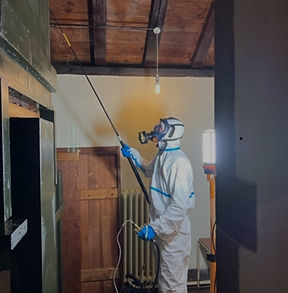
2. Chemical Pest Control
Chemical control uses approved pesticides to reduce or eliminate pest populations.
Modern pesticides are carefully regulated and, when used correctly, provide an effective means of controlling many pest species. However, chemical treatments should always form part of a wider pest management strategy rather than being viewed as a standalone solution.
Depending on the pest involved, chemical treatments may include:
Insecticide sprays
Residual insecticides
Dust formulations
Rodenticides
Gel baits
Wasp nest treatments
Insect growth regulators (IGRs)
Professional pest controllers select products based on the target species, treatment area and potential risks to people, pets and the environment.
Advantages
Rapid knockdown of many pests
Effective against large infestations
Suitable for a wide range of pest species
Can provide ongoing residual protection
Limitations
Requires careful application
Some products are unsuitable for sensitive environments
Incorrect use may contribute to pesticide resistance
May require temporary restrictions on access to treated areas
Chemical treatments should always be used responsibly and in accordance with product labels and relevant legislation.
3. Biological Pest Control
Biological control uses natural predators, parasites or pathogens to suppress pest populations.
Although commonly associated with agriculture and horticulture, biological control is increasingly used in commercial growing environments and integrated pest management programmes.
Examples include:
Predatory mites controlling spider mites
Parasitic wasps targeting greenhouse pests
Beneficial nematodes controlling vine weevil larvae
Natural microbial products targeting specific insect species
Because biological controls work with natural ecosystems, they often provide sustainable long-term management while reducing reliance on conventional pesticides.
Advantages
Environmentally responsible
Highly species-specific
Reduced pesticide use
Lower risk of resistance developing
Limitations
Slower acting
Environmental conditions can influence effectiveness
Not suitable for every pest or environment
4. Cultural Pest Control
Cultural control focuses on removing the conditions that allow pests to survive, breed and multiply.
Rather than targeting pests directly, these methods reduce the attractiveness of an environment.
Examples include:
Improving housekeeping standards
Removing food sources
Managing waste effectively
Rotating stored stock
Eliminating standing water
Maintaining drainage systems
Improving vegetation management around buildings
Correct food storage procedures
For many commercial premises, particularly within the food industry, cultural controls form the foundation of an effective pest management programme.
By reducing access to food, water and shelter, organisations can dramatically lower the risk of infestations developing.
5. Integrated Pest Management (IPM)
Integrated Pest Management (IPM) is widely recognised as best practice within the pest control industry.
Rather than relying on a single treatment, IPM combines multiple control methods to deliver sustainable, long-term pest management.
An IPM programme typically includes:
Pest identification
Inspection
Monitoring
Risk assessment
Proofing
Hygiene improvements
Habitat modification
Targeted treatments where necessary
Ongoing review and monitoring
This approach ensures that pesticides are used only where appropriate and that preventative measures reduce the likelihood of repeat infestations.
For commercial organisations, IPM supports compliance with food safety standards, protects reputations and helps maintain high environmental standards.
Comparing the Main Pest Control Methods
Method | Best For | Speed | Environmental Impact | Long-Term Effectiveness |
Physical | Rodents, birds, exclusion | Fast | Low | High when maintained |
Chemical | Severe infestations | Fast | Medium | Moderate |
Biological | Agriculture, horticulture, specialist environments | Moderate | Very Low | High |
Cultural | Prevention | Gradual | Very Low | Very High |
Integrated Pest Management | Most pest situations | Varies | Low | Excellent |
No single method is universally superior. The most effective solution often combines several approaches tailored to the pest, property and level of infestation.
Which Pest Control Method Is Best?
There is no one-size-fits-all answer.
For example:
A mouse entering a warehouse may be resolved through proofing, trapping and improved waste management.
A bed bug infestation may require heat treatment, targeted insecticides and follow-up inspections.
Persistent fly activity in a food production facility may call for improved sanitation, fly screens, monitoring devices and targeted chemical control where necessary.
The most effective pest control programmes address the root causes of an infestation rather than focusing solely on eliminating visible pests.

Effective pest control is about selecting the right combination of methods rather than relying on a single treatment. Physical, chemical, biological and cultural controls each have an important role to play, while Integrated Pest Management brings these approaches together to deliver sustainable, long-term results.
In our next article, we'll explore the most effective pest control methods for specific pests commonly encountered in the UK, including rodents, cockroaches, bed bugs, flies, ants and stored product insects, alongside guidance on when professional pest control is the safest and most effective option.