Rising Cockroach Activity in Wales: What the Data and Field Evidence Suggest

Cockroach Infestations are Rising
Recent media reports have highlighted an increase in cockroach infestations across parts of Wales, particularly within Cardiff and other urban centres. While the rise in reported activity is attracting public attention, the pest management implications extend far beyond the headlines.
From a professional perspective, the most significant development is not simply an increase in infestation numbers. It is the changing distribution, persistence and complexity of infestations being encountered across Wales and the border counties.
As pest management consultants operating throughout Herefordshire and the Welsh Borders, PGM Pest Control have observed a notable increase in cockroach-related investigations and treatment programmes over the last few months. This reflects a wider trend that many experienced technicians within the pest sector predicted.
Between January and May 2026, our consultancy recorded a 27% increase in cockroach-related enquiries compared with the same period in 2025
The public perception of cockroaches remains largely unchanged. Infestations are frequently viewed as indicators of poor hygiene or neglect. In reality, modern infestations are increasingly associated with structural vulnerabilities, housing density, property usage patterns and the movement of goods rather than cleanliness alone.
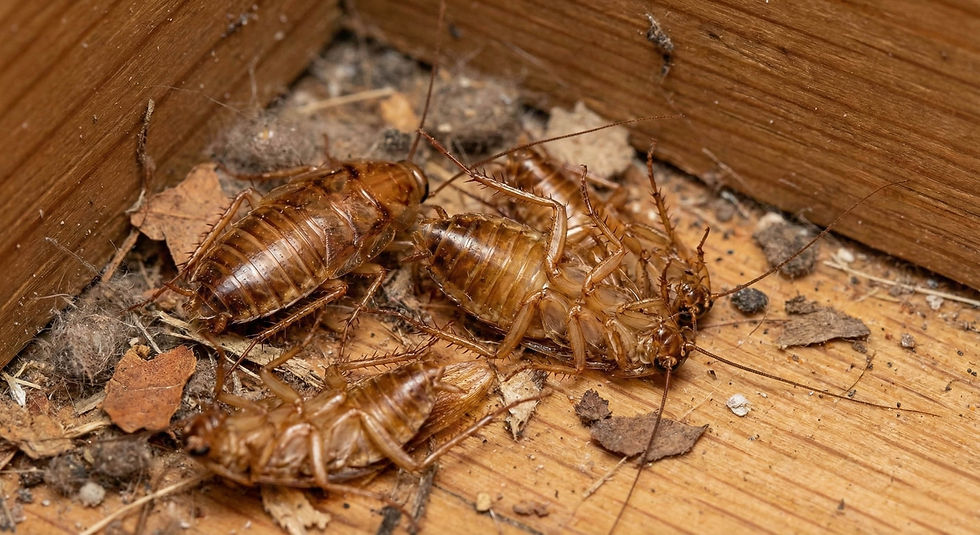
Within Herefordshire and Worcestershire, the German cockroach, Blattella germanica, continues to be the most common species associated with urban infestations, exceeding the prevalence of the Oriental cockroach, Blatta orientalis.

Its success lies in its ability to exploit the built environment. Service risers, utility penetrations, suspended ceilings, heating infrastructure, ducting and wall voids provide extensive harbourage opportunities that are often inaccessible during routine inspections.
This presents a particular challenge within multi-occupancy residential buildings.
In many cases, treatment programmes are initiated only after visible activity has been reported by occupants. By this stage, populations are frequently established across multiple harbourage sites and may have dispersed beyond the originating unit.
The visible infestation is often only a small component of a much larger hidden population. Recent reporting has understandably focused on Cardiff, where council data and pest control activity indicate a clear upward trend. However, concentrating solely on major urban centres risks overlooking a broader pattern.
Across the Welsh Borders, PGM Pest Control are increasingly encountering cockroach activity in locations that historically presented relatively low levels of infestation pressure. Smaller towns, mixed-use developments, converted residential properties and suburban housing stock are all appearing more frequently within investigation data.
Several of our recent investigations have involved multi-occupancy residential buildings where infestations had spread through service risers and utility penetrations rather than through direct occupant behaviour.
Several factors may be contributing to this shift
The continued subdivision of residential properties, increased population mobility, higher occupancy densities and the growing circulation of second-hand appliances all create additional opportunities for introduction and establishment.
At the same time, ageing building infrastructure often provides extensive concealed harbourage that allows populations to remain undetected for prolonged periods. For housing providers and local authorities, the implications are significant.
Cockroach management should not be viewed solely as a treatment issue. Sustainable control requires an integrated approach encompassing building maintenance, reporting procedures, resident engagement, proofing standards and ongoing monitoring.
Where infestations are repeatedly treated without addressing underlying environmental factors, recurrence is often inevitable.
There is also a growing need to improve public understanding of infestation dynamics. The assumption that cockroaches are exclusively associated with poor housekeeping can discourage early reporting, delay intervention and ultimately increase the scale and cost of remediation.
The recent increase in media attention should therefore be welcomed. However, the conversation must move beyond simple infestation counts.
The more important question is why conditions are becoming increasingly favourable for establishment, persistence and spread.
From our perspective, the evidence suggests that cockroach management is becoming a more complex challenge for housing providers, environmental health teams and pest professionals across the UK.
The organisations that achieve the best outcomes will be those that focus not only on eradication, but also on prevention, monitoring and the structural factors that allow infestations to flourish in the first place.
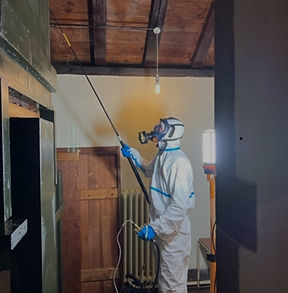
PGM Pest Control continues to monitor cockroach activity across Herefordshire and Worcestershire, providing expert pest management services to residential properties and commercial businesses.