How to Choose a Trustworthy Pest Control Company in Herefordshire & Worcestershire

Updated: Jul 28
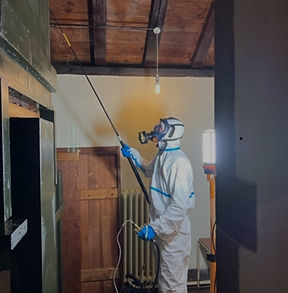
Finding pests in your home or business can be stressful. Whether you've discovered rats in the loft, mice in your kitchen, a wasp nest in the roof space or signs of bed bugs in your guest accommodation, your first instinct is often to get rid of them as quickly as possible.
Unfortunately, that's where many people make their first mistake.
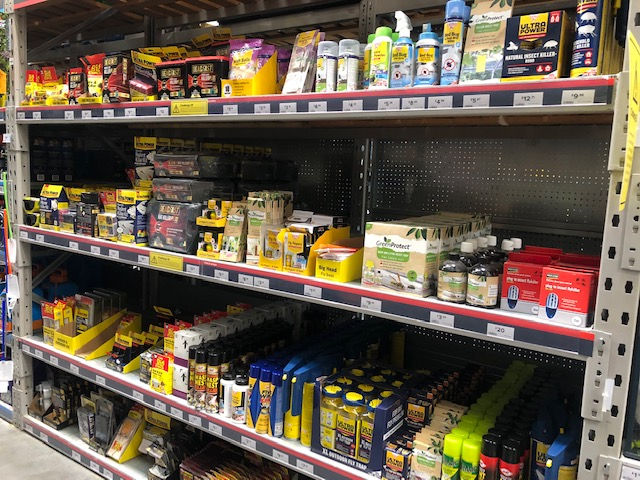
A quick trip to the local DIY store may seem like the easiest solution. Shelves are filled with rodent bait, insect sprays, traps and powders, all promising to solve the problem.
While some products have their place, they rarely address the reason the infestation started in the first place.
At PGM & Son, we've lost count of the number of properties we've visited where customers have already spent time and money trying to deal with the problem themselves. In many cases, the infestation has continued to grow unnoticed, making it more difficult—and often more expensive—to resolve.
Professional pest management is about far more than removing unwanted pests. It's about understanding how they entered the property, what attracted them, where they're living and, most importantly, how to stop them coming back.
That's why choosing the right pest management company matters.
Pest Control or Pest Management – What's the Difference?
Although the terms are often used interchangeably, there's an important difference between pest control and pest management.
Traditional pest control often focuses on treating the immediate problem. The aim is to eliminate the pests that can be seen, usually through trapping, baiting or pesticide treatments.
Professional pest management takes a much broader view. It starts by asking questions.
Why are the pests here?
How did they gain access?
What food, water or shelter is attracting them?
Are there structural issues that need addressing?
Can the problem be prevented rather than repeatedly treated?
By understanding the behaviour and biology of each pest species, a professional pest management company can develop a long-term strategy that reduces the likelihood of future infestations.

In many cases, the treatment itself is only a small part of the solution.
Simple measures such as sealing an entry point, improving waste management, repairing damaged drains or removing sources of standing water can have a far greater impact than repeatedly applying pesticides.
That's why modern pest management is built around prevention first, treatment second.
The Risks of DIY Pest Control
It's understandable why many people try to deal with pests themselves. DIY products are readily available and often appear to offer a quick, inexpensive fix.
However, pests are remarkably adaptable, and treating them successfully requires more than simply choosing a product off the shelf.
One of the most common problems is misidentification. Different pest species require different treatment methods, and using the wrong product can allow an infestation to continue unchecked.
For example, what appears to be a mouse infestation may actually involve rats, while carpet beetles are frequently mistaken for clothes moths. Without correctly identifying the pest, any treatment is little more than guesswork.
We've also seen situations where customers unknowingly block rodent entry points before the infestation has been controlled. Rather than solving the problem, this can trap rodents inside walls or roof spaces, creating unpleasant odours, additional property damage and even larger infestations elsewhere in the building.
Incorrect use of pesticides presents another significant risk. Applying too much product, using chemicals in unsuitable locations or failing to follow the manufacturer's instructions can put children, pets and wildlife at unnecessary risk while offering little improvement in results.
Professional pest management isn't about using more chemicals—it's about using the right solution at the right time.
Why Choosing a BPCA Member Gives You Confidence
When you're inviting a pest management company into your home or business, you want to know you're dealing with qualified professionals. That's why PGM & Son is proud to be a member of the British Pest Control Association (BPCA), the UK's leading trade association for the professional pest management industry.
BPCA membership isn't awarded automatically
Companies must demonstrate that they meet rigorous professional standards and continue to maintain those standards through regular assessment and ongoing professional development.
For our customers, this means you can be confident that you're choosing a company that is:
Professionally trained and qualified.
Fully insured.
Independently assessed against recognised industry standards.
Committed to safe, responsible and ethical pest management.
Focused on continual improvement through ongoing training and development.
Choosing a BPCA member isn't simply about selecting a contractor—it's about choosing a company that is committed to protecting people, property, wildlife and the environment through professional pest management. Check Your Pest Controller is a BPCA Member
Professional Pest Management Is About Prevention
One of the biggest misconceptions surrounding our industry is that pest control begins when pests appear. In reality, the best pest management often prevents infestations from happening at all.
Every successful treatment starts with a thorough inspection of the property. Our technicians look far beyond the obvious signs of activity, identifying the conditions that allowed the infestation to develop in the first place.
That might include damaged air bricks, gaps around service pipes, overflowing gutters, poorly stored waste, overgrown vegetation, damaged drains or structural defects that provide easy access for rodents and insects.
Once these risks have been identified, we can recommend practical improvements that make the property significantly less attractive to pests. This proactive approach doesn't just reduce the need for pesticides—it provides longer-lasting protection for your home or business.
After all, the best pest treatment is the one you never need because the problem has already been prevented.
Our Simple 5-Step Pest Control Process
We make pest control straightforward from the very first call.
Contact our friendly team
We carry out a detailed inspection
We identify the pest species and source of the problem
We provide safe, targeted treatment
We offer practical prevention advice and follow-up support where required.
Our goal isn't just to remove pests today—it's to help stop them coming back. Pest management is more than pesticides. You need to combine biological, cultural, physical and chemical tools to deal with an infestation for good.
Too often, we see botched DIY pest control attempts that result in even larger infestations. We’ve seen amateurs cause serious harm through the incorrect use of chemicals - not only to British wildlife and domestic pets but to themselves and their families.
Fast Response Across Herefordshire & Worcestershire
As a genuinely local family business, we're never far away when you need us. Our technicians regularly work throughout Herefordshire and Worcestershire, providing prompt responses for both emergency call-outs and planned pest management visits. Being local means we understand the area's buildings, businesses, farms and seasonal pest pressures better than anyone.
PGM Pest Control understand modern pest management, the science behind it, and why professional standards matter.
Professional Qualifications That Give You Confidence
Our technicians continually invest in training to stay up to date with the latest legislation, treatment methods and best practice. From BPCA membership and RSPH qualifications to responsible rodenticide use and ongoing professional development, we're committed to delivering the highest standards of pest management.
Honest Advice With No Unnecessary Treatments
Sometimes the best solution isn't the most expensive one. If a treatment isn't required, we'll tell you. If proofing or preventative measures are a better long-term option, that's exactly what we'll recommend. Our reputation has been built on honest advice, transparent pricing and putting our customers' interests first.
Green Pest Control - Integrated Pest Management (IPM)
For many premises managers, a proactive pest management strategy is low down the list of business priorities. But when selecting a pest control contract, care should be given to specify a contractor that can prevent pests rather than cure their effects and can do this using the minimum of chemicals.
When a site embraces the need for proactive pest control and is working towards pesticide-free pest control at that, many pest problems can be stopped in their tracks. Some may not even see the light of day.
Green pest control might range from a firm claiming to spray fewer pesticides to one that will use every possible alternative to chemicals including heating, freezing, and deep cleaning.
The difference between these approaches is the point at which chemicals are used. At one end of the spectrum chemicals are used at an early stage, at the other they are the very last port of call.

Integrated Pest Management
As a member of BPCA we practice Integrated Pest Management (IPM). This is a sustainable approach to managing pests by combining biological, cultural, physical and chemical tools in a way that minimises economic, health, and environmental risks.
IPM has been around for thousands of years and started when man first became an agrarian society. It protects people and food as well as the environment.
Professional pest controllers use the minimum amount of pesticides wherever possible, using other means to limit the pest population through their understanding of the biology and habits of pest species, emphasizing control, not eradication.
The alternative treatments administered include targeted measures such as heat treatments, new generation insecticide gels, pheromone lures and pesticide free materials in preference to the more traditional insecticidal spray treatments that are often dispersed over a wide area.
Routinely placed rodent bait boxes full of toxic bait must be replaced by non-toxic monitoring stations which pick up the earliest signs of an infestation. This is a legal requirement via the product registration process for rodenticides (Biocidal Product Regulations).

Why should your Pest Control Contractor be Green?
But what is the business case for 'green' pest control? Apart from saving your business money by preventing infestation, contractors who practice IPM will also work with you to change the culture of your organisation, helping all your employees to change behaviours and thus make your premises less attractive to pests.
Site managers should not overlook the importance of implementing simple but effective pest prevention measures including finding and proofing possible pest entry points into the property such as holes around pipes, weep joints and air vents, installing fly screens, and having electronic fly killers in catering areas and front-of-house.
An infestation could have its origins in a delivery or even brought in by unsuspecting staff or visitors – pests can be adept at hitch-hiking. Therefore staff should be vigilant, especially when checking incoming deliveries and look for evidence of pests.
One area of concern is the rise in the number of sites reporting bed bugs, which might surprise many people who associate this pest with houses and cheap hotels.
Visitors and staff are unwittingly bringing them into the building, attached to their clothes or other personal belongings. However, if members of staff know how to spot the earliest signs of a bed bug infestation and crucially where to look for bed bugs, the problem can be contained with professionally delivered chemical-free heat treatment.
"When I think of Pest Control I always think of BPCA. Contractors who have their logo show that they follow the high standards set by the Association" - Hygiene & Facilities Manager, Devro.
Working together to be Pest Free
One significant issue to note: IPM will not work without the active involvement of both the pest control contractor and the client. If the client carries out the relevant cleaning, proofing and other measures, control of infestation is established faster, more efficiently and with less risk.
Whether it’s rats, mice, bed bugs, wasps, cockroaches or birds, all pests must be dealt with by people with the appropriate skills to get the job done quickly, humanely and safely.
Frequently Asked Questions When Choosing a Pest Management Company
What checks should I carry out before hiring a pest control company?
Before choosing a pest management company, it is important to look beyond price and availability.
A professional pest controller should be able to demonstrate:
Appropriate training and qualifications
Professional membership or industry accreditation
Public liability insurance
Experience dealing with your specific pest problem
A clear explanation of their treatment approach
A commitment to safe and responsible pest management
Checking reviews, asking about qualifications and understanding how the company approaches pest problems can help you make an informed decision. A reputable pest management company should always be happy to explain their methods and provide confidence before any work begins.
Can anyone legally call themselves a pest controller?
Yes. Unlike some professions, the term "pest controller" is not a protected title, meaning there are individuals operating in the industry with very different levels of training, experience and professional standards.
This is why it is important to check who you are choosing.
Professional pest management requires knowledge of:
Pest identification
Pest behaviour and biology
Safe treatment methods
Relevant legislation
Environmental responsibilities
Choosing a trained and accredited pest management company helps ensure your problem is dealt with safely, professionally and effectively.
What questions should I ask a pest control company before agreeing to treatment?
Before agreeing to any pest treatment, a professional company should be able to answer questions such as:
What type of pest problem do I have?
How did the infestation occur?
What treatment methods do you recommend and why?
Are there alternatives to using pesticides?
How many visits may be required?
What can I do to prevent the problem returning?
Are there any risks to children, pets or wildlife?
Are follow-up visits or monitoring required?
A trustworthy pest management company will take the time to explain the problem and the recommended solution rather than simply offering a quick treatment.
Why are some pest control companies cheaper than others
The cost of pest control can vary depending on the level of experience, training, treatment methods and service provided.
A lower price does not always mean better value.
Some companies may offer cheaper treatments by:
Carrying out minimal inspections
Using a basic treatment approach
Providing limited follow-up support
Focusing only on removing visible pests rather than preventing recurrence
Professional pest management involves understanding the cause of the problem, selecting the right solution and providing advice to reduce future risks.
Should I choose a pest controller based only on price?
Choosing the cheapest option may appear attractive, but effective pest management is about achieving the right result safely and responsibly.
A professional pest management company should provide more than just a treatment. They should provide:
Accurate identification
Expert advice
Safe working practices
Appropriate treatment methods
Prevention recommendations
The cheapest treatment may not always be the most cost-effective if the infestation returns because the underlying cause was never addressed.
What does a professional pest management contract include?
A professional pest management contract is designed to provide ongoing protection rather than simply reacting when pests appear.
Depending on the property and level of risk, a contract may include:
Initial site surveys and risk assessments
Regular inspections
Pest monitoring
Preventative recommendations
Digital reporting and documentation
Treatment where required
Ongoing advice and support
Commercial pest management contracts are particularly important for businesses where pests can affect customers, employees, food safety, compliance and reputation.
How do I know if a pest treatment has been carried out correctly?
A professional pest treatment should always begin with understanding the problem, not simply applying a product.
A competent pest controller should:
Identify the pest species correctly
Explain the treatment process
Discuss any preparation required
Provide safety advice
Explain what happens next
Recommend prevention measures where appropriate
Effective pest management is not always about seeing immediate results. Some treatments require monitoring and follow-up visits to confirm that the infestation has been successfully controlled.
What should a responsible pest management company do differently?
A responsible pest management company looks beyond simply removing pests. They should focus on:
Understanding why pests are present
Preventing future infestations
Using the most appropriate control methods
Reducing unnecessary pesticide use
Protecting people, pets and wildlife
Providing honest advice
Modern pest management is about finding sustainable solutions that balance effective pest control with environmental responsibility.
Why Herefordshire and Worcestershire Choose PGM & Son
Our reputation has been built on trust, professionalism and exceptional customer service. Customers choose us because we're:
Award-winning
Family-run
BPCA members
Fully insured
Highly trained
Local experts
Available 24/7 for emergency call-outs
Focused on long-term prevention, not quick fixes
Honest, friendly and reliable
We believe in doing the job properly the first time.
If a treatment isn't needed, we'll tell you.
If proofing is a better solution than pesticides, that's exactly what we'll recommend.
That's the PGM & Son way.