The difference between Bees, Wasps and Hornets


Bees, wasps, and hornets differ primarily in appearance, diet, and aggression: bees are fuzzy pollinators that rarely sting, wasps are sleek, carnivorous, and aggressive, and hornets are larger, more venomous, and highly defensive.
While all can sting, only honeybees die after stinging, whereas wasps and hornets can sting multiple times

Bees
There’s a lot of different species of bee but the most common, and loved ones, in the UK are the bumble bee and the honey bee.
Bees are massively important to our ecosystem. They are pollinators which essentially helps our food supplies in the UK. Bees pollinate around a third of what we eat.
Bees are fascinating creatures, storing their honey in complex hives made from wax which you might better know as honeycomb.

These bees are golden in colour with tiny hairs all over that give them a fuzzy look.
Bees are happy to go about their business undisturbed.
They won’t normally bother you if you don’t bother them. If a bee is threatened it may sting but this is rare because once a bee has stung you, it’s sting comes away from its body and it dies.
Sometimes feral swarms can set up home in chimneys and wall cavities which can present problems so if you do have a swarm it’s best to contact a bee keeper or a qualified pest controller >
Wasps
Whilst wasps are early pollinators they main function is to act as a natural predator. There are many thousands of wasp species so it can be difficult to differentiate between them.
Wasps are often considered a pest because they build nests close to places which the public frequent such as restaurants and cafes and also in gardens.
Some people are allergic to wasp stings which makes them even more of a public health issue. Anaphylaxis is a medical emergency. If not treated quickly it can be fatal. If you see someone with symptoms you should call for an ambulance immediately – dial 999.

Unlike bees, wasps don’t die when they sting. Like bees, they won’t normally attack unless they feel threatened however, if they do they can (and will) sting multiple times – ouch!
And wasps will also call for back up by sending out a pheromone which signals to other wasps they need help.
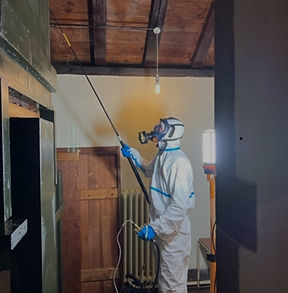
Getting stung by multiple wasps can be very serious which is why we recommend you don’t try to treat or remove a wasp nest yourself. Pest controllers use special equipment to protect themselves.
Hornets
It is unlikely you will see a hornet as they are not a common sight. However, hornets are the heavyweight of the wasp world – coming in at twice the size of a wasp they can look very frightening!
Our native hornet is the European Hornet which has brown and yellow markings
Asian hornets are slightly smaller and have black or dark brown markings with a distinct yellow band at the rear, a bright yellow belt at the waist and a black head with an orange or yellow face.
It is crucial that any potential sightings are reported so experts can take quick and effective action to eradicate Yellow-Legged Asian Hornets. The best way is to use the 'Asian Hornet Watch' app to record and report any sightings. The app is available for both Apple and Android devices. Photos and videos can also be sent by email to: alertnonnative@ceh.ac.uk

They are not native to the UK and are an invasive predatory species which could have a destructive impact on our wildlife. Hornet stings are often more painful due to the level of venom in their sting.
If you think you have a hornet nest or if you spot a hornet give PGM Pest Control Services a call on 01981 540088 who remove hornets safetly and report sightings.
It is important to be aware of the differences between bees, wasps, and hornets. This will help you to avoid being stung and to take the necessary steps to protect yourself and your family from these insects.
As there are so many different types of wasp and bee, the best thing to do if you are concerned about a buzzing insect is to give PGM & Son Pest Control a call.
We’ll identify the species and determine what risk it poses. We’ll give advice and solutions on handling all your wasp, bee and hornet problems.
For further information on bees, wasps and hornets use our AI Pest Assist on the right bottom of your screen for free help support and guidance. Or check out our frequently asked questions page.
If you’ve a problem with wasps, hornets, bees or any other pest control issues across Herefordshire, or Worcestershire, give PGM Pest Control a call on 01981 540088 for a free no-obligation quote.
Email us at contact@pgmpestcontrol.co.uk for help, support and guidance.