Wasp Control for Herefordshire Food & Hospitality Businesses: What You Need to Know This Summer

Updated: Jun 9
Wasp activity is rising across Herefordshire. For restaurants, pubs, cafés, hotels and food businesses, it isn't just a nuisance — it's a legal compliance risk that can cost you your Food Hygiene Rating, your customers and your licence to trade.
The Summer Risk Your Business Cannot Afford to Ignore
Every summer, pest controllers across the UK see the same pattern play out: a food or hospitality business discovers a wasp nest in late August, at peak season, when colonies can contain thousands of highly defensive workers.
By that point, the options are more limited, the risk is greater, and for any business operating under food hygiene regulations, the clock is already ticking.
2026 is shaping up to be a busier-than-average wasp season. A mild winter has likely improved queen survival rates, meaning more nests are establishing right now across Herefordshire — in roof voids, wall cavities, outbuildings, bin stores, beer gardens and service areas.
At PGM Pest Control, we work with food and hospitality businesses across Herefordshire and Worcestershire to ensure that wasp activity never becomes a compliance problem. This is what you need to know.

The Legal Position: Pest Control Is Not Optional for Food Businesses
This point is worth stating plainly. If you operate a restaurant, pub, café, hotel kitchen, takeaway, farm shop, school canteen or any other food business in the UK, pest control is a legal requirement — not a discretionary spend.
UK food businesses are legally required to prevent pest access and contamination under the Food Hygiene (England) Regulations 2006. Environmental Health Officers (EHOs) have the power to close premises, issue Hygiene Improvement Notices, and refer businesses for prosecution where evidence of pest activity is found.
Pest control must be integrated into the business's HACCP food safety management system as a documented prerequisite programme, with monitoring records available for inspection on demand.
Wasps are classified as flying insects under food hygiene legislation. Their presence in or around food preparation and service areas is a direct breach of food safety standards — and one that EHOs take seriously.
EHO inspections are almost always unannounced. Officers do not need to give prior warning, and pest control documentation is often one of the first things they will ask to see
Under the Food Safety Act 1990, an EHO can serve a Hygiene Emergency Prohibition Notice, closing your business on the spot with no prior warning. Your Food Hygiene Rating can drop from a 5 to a 0 in a single visit. Prosecution can follow, with unlimited fines and up to two years' imprisonment for the most serious offences.
The message is clear:
Doumented, proactive pest management is not just good practice — it is your legal obligation and your first line of defence in any EHO inspection.
The Commercial Reality: Wasps Cost You Customers
Beyond compliance, there is a straightforward commercial argument for acting early. Research from Rentokil Pest Control found that nearly half of British consumers are put off from visiting outdoor hospitality venues due to the presence of wasps — more than uncomfortable seating or noise.
A fifth said they would leave or cut their visit short if just one single wasp was present, a pattern that directly hits hospitality businesses in the pocket.
For any Herefordshire pub, restaurant or café with a beer garden, terrace or outdoor dining area, the peak wasp nuisance period — August and September — falls squarely within the busiest trading months of the year.
A confirmed pest issue can trigger a chain of consequences well beyond the treatment invoice: reviews on TripAdvisor and Google that arrive quickly and stay publicly visible, and hygiene rating drops that are slow to reverse.
In a market where nearly 38% of UK diners say they are eating out less than they did a year ago, every customer who leaves early or doesn't return is a margin you cannot recover.
Why Herefordshire Food Businesses Face Heightened Risk
Herefordshire's landscape creates particular challenges for food and hospitality businesses during wasp season:
Orchards and agricultural surroundings
The county's fruit-growing heritage means fallen and fermenting fruit is abundant throughout late summer, providing a natural food source that draws wasps to the surrounding area in large numbers.
Rural and older premises
Many of Herefordshire's pubs, hotels and farm shops occupy older buildings with roof voids, stone walls and outbuildings that provide ideal undisturbed nesting sites close to food service areas.
Outdoor trading areas
Beer gardens, terraces and outdoor dining areas are directly exposed to wasp activity during the peak nuisance period, just when your outdoor covers are most valuable to your business.
Waste and bin areas
Commercial premises generating food waste are a significant attractant. Bins and waste stores positioned close to service areas or customer zones are a common source of late-summer wasp problems.
Understanding the Seasonal Threat to Your Business
Knowing when your business is most at risk allows you to plan accordingly:
June — Act Now
Nests are small and still developing. This is the easiest and most cost-effective time to identify and treat a nest. A colony dealt with in June contains hundreds of wasps. The same colony left until August can contain several thousand.
July — Monitor Closely
Colonies are growing rapidly. Wasp numbers around premises increase and outdoor areas begin to see more activity. Any treatment at this stage is more complex than early-season intervention.
August to September — Peak Operational Risk
This is the most dangerous period for food businesses. Worker wasps lose their role within the colony as the queen stops laying, leaving them purposeless, hungry and highly aggressive. They are drawn to sugary foods, drinks, waste and outdoor dining areas in large numbers. For a business with outdoor covers, this period can directly affect customer experience, reviews and revenue.
October — Risk Declines
Colony die-off begins naturally as temperatures fall. Any nests identified at this stage can be safely removed without treatment.
What a Professional Wasp Nest RemovalTreatment Involves
What to Expect:
We know that for busy operators, any disruption to trade needs to be minimal and predictable. Here is exactly what happens when PGM Pest Control attends a commercial premises.
Assessment
Our BPCA-certified technician will assess the location, size and accessibility of the nest and identify the safest treatment approach with minimal disruption to your operation. We work around your trading hours wherever possible.
Treatment
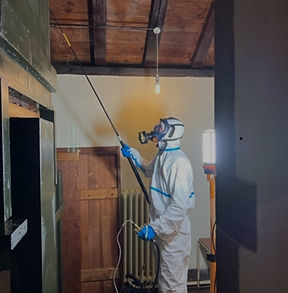
A professional-grade insecticidal product is applied directly into or around the nest entrance using specialist equipment. Our technicians attend in full protective clothing. The treatment itself takes a matter of minutes in most cases.
Immediate Aftercare
Wasps will become temporarily more active immediately following treatment as the colony responds. This typically subsides within 24 hours. We will advise you on any temporary precautions for staff and customers during this period.
Documentation
We provide full written treatment records and documentation. This is essential for your HACCP compliance records and for demonstrating due diligence to an EHO should an inspection follow. If your pest control reports show that recommendations have been made and acted upon, an EHO is far more likely to view your management positively.
Failure to act on documented advice can itself be treated as a management failure during inspection.
Re-Treatment Guarantee If a nest remains active following treatment, we return to re-treat at no additional charge.
One-Off Treatment or Ongoing Commercial Contract?
Depending on the nature and size of your premises, there are two ways PGM Pest Control can support your business.
Single Treatment
For businesses that have identified an active wasp nest and need prompt professional treatment. Ideal for single-site operators, smaller premises or situations where a nest has been discovered unexpectedly. Our BPCA-certified technicians can typically attend within 24–48 hours during peak season. Call 01981 540088 to book a single treatment.
Commercial Pest Management Contract
For food businesses that need to demonstrate ongoing, documented pest management as part of their HACCP compliance framework. A commercial contract with PGM provides:
Scheduled seasonal inspections and proactive monitoring
Priority response times during peak season
Full written records and documentation for EHO inspection
Proofing advice to reduce future nest establishment
A named point of contact who understands your premises
A contract is the most cost-effective and compliance-secure approach for any food or hospitality business operating under regular EHO scrutiny. Call 01981 540088 to discuss a commercial pest management contract.
Expert Advice from PGM's BPCA-Certified Technicians
"For food businesses, the conversation about wasp control shouldn't start when a customer complains or a nest is discovered in August. It should start now, in June, when nests are small and the risk to your premises, your rating and your customers is still entirely manageable.
We work with hospitality and food businesses across Herefordshire to ensure they have the documentation, the treatment history and the proactive approach that stands up to scrutiny — whether that's an EHO inspection or a busy Saturday afternoon in a beer garden."
Early Action Protects Your Business
A wasp nest identified now — in June — is a straightforward treatment. The same nest discovered in late August, at your busiest trading period, with thousands of aggressive worker wasps and an unannounced EHO visit on the horizon, is an entirely different problem. Wasp FAQs >
Don't wait for wasp activity to become a customer complaint, a one-star review or a Food Hygiene Rating issue. Act now, while the season is still early and the solution is simple
PGM Pest Control are Herefordshire's largest, most trusted BPCA-accredited pest control specialists, serving food businesses, hospitality venues and commercial premises across Herefordshire and Worcestershire.
Wasp problem?
Don’t panic.Don’t Google. Think PGM.
Award-Winning Pest Control Specialists
Call the PGM Pest Hotline for fast, local, affordable pest control 01981 540088.