How to Identify Bed Bugs

Updated: Sep 25
Table of Contents
Bed bugs can be difficult to identify, particularly in the early stages of an infestation. Their size, colour and appearance change as they develop, and several other insects can easily be mistaken for them.
Our BPCA-accredited pest technicians regularly inspect and identify bed bug infestations in homes, hotels, HMOs and other properties across Herefordshire and Worcestershire. This guide explains the key features to look for and the signs that may indicate bed bug activity.
What do bed bugs look like?
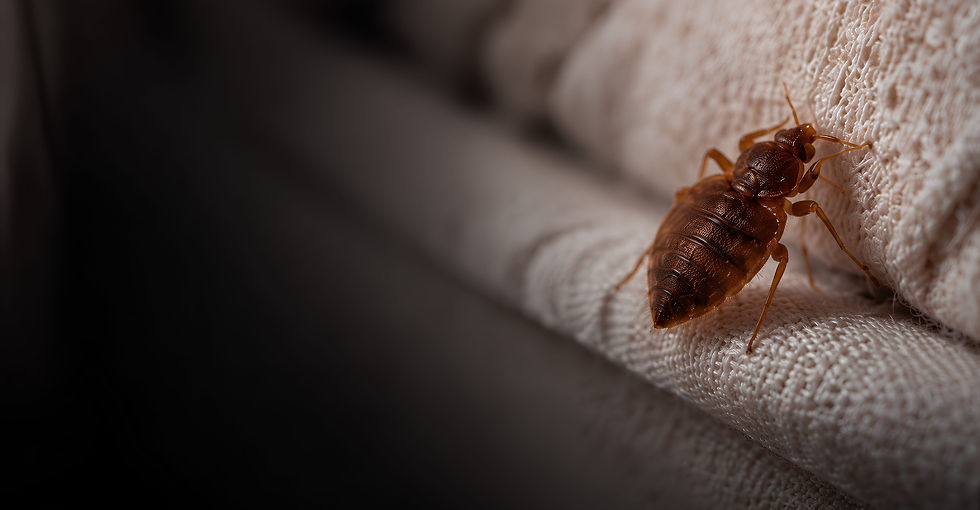
Adult bed bugs are small, wingless insects with a flat, oval-shaped body, six legs and a reddish-brown colour. They are usually around 4–7 mm long, making them roughly similar in size to an apple seed.
Before feeding, bed bugs appear flatter and broader. After taking a blood meal, the abdomen becomes more rounded, swollen and darker red, which can make the insect look noticeably different.
Because their appearance changes depending on whether they have recently fed, it is useful to look at several features rather than relying on colour alone.
Adult bed bug at a glance
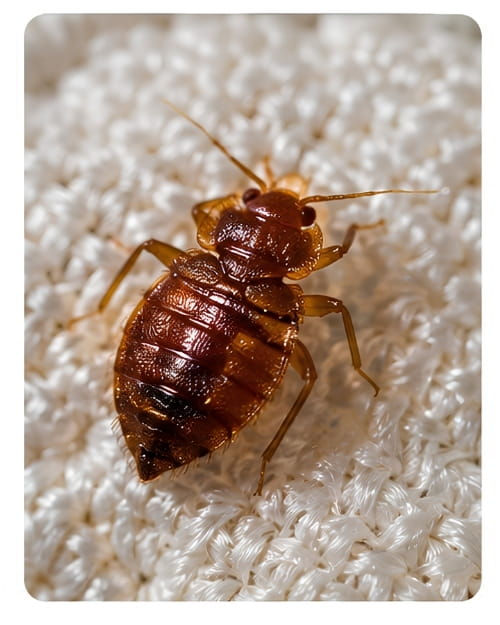
Size: approximately 4–7 mm
Shape: flat and oval
Colour: brown to reddish-brown
Legs: six
Wings: none
Movement: crawling
Feeding: blood
What do baby bed bugs look like?
Baby bed bugs are called nymphs. They are smaller than adult bed bugs and can be much harder to spot, especially during the earliest stages of development.
When unfed, young nymphs are usually pale, yellowish or almost translucent.
After feeding, their abdomen becomes noticeably redder as the blood meal shows through the body. As they grow and moult through several developmental stages, they gradually become larger and darker until they reach the reddish-brown appearance of an adult bed bug.
Because nymphs can be extremely small and pale, they are often overlooked during the early stages of an infestation.
Nymphs at a glance
Size: smaller than adult bed bugs
Colour when unfed: pale, yellowish or translucent
Colour after feeding: redder or darker through the abdomen
Development: pass through several nymph stages before adulthood
Appearance: increasingly darker and more adult-like as they mature
What do bed bug eggs look like?
Bed bug eggs are very small, pearly white to off-white and around 1 mm long. They are usually oval or slightly elongated and can be difficult to see without a close inspection.
Females typically lay eggs in sheltered cracks, crevices and harbourage areas, often close to where bed bugs are hiding. The eggs may appear fixed to the surface rather than loose, which can make them easy to overlook around bed frames, furniture joints and other protected areas.
Finding something white on a mattress does not automatically mean it is a bed bug egg. Fibres, dust, skin flakes and other debris can look similar, so identification should be based on several signs rather than appearance alone.

Bed bug eggs at a glance
Size: approximately 1 mm
Colour: pearly white to off-white
Shape: oval or slightly elongated
Location: cracks, crevices and harbourage areas
Visibility: difficult to spot without close inspection
Shed skins at a glance
Colour: pale, yellowish-brown or translucent
Appearance: empty and lightweight
Shape: similar to a bed bug
Cause: left behind as nymphs moult and develop
Location: commonly found close to harbourage areas
How can you tell if bed bugs are present?
Bed bugs are highly effective at hiding, so you may notice evidence of an infestation before you see a live insect. A professional inspection looks for several signs together rather than relying on one symptom alone.
Live bed bugs
Seeing a live bed bug is one of the clearest signs of activity. Adults are easier to spot, while young nymphs can be much smaller and paler.
Dark spotting
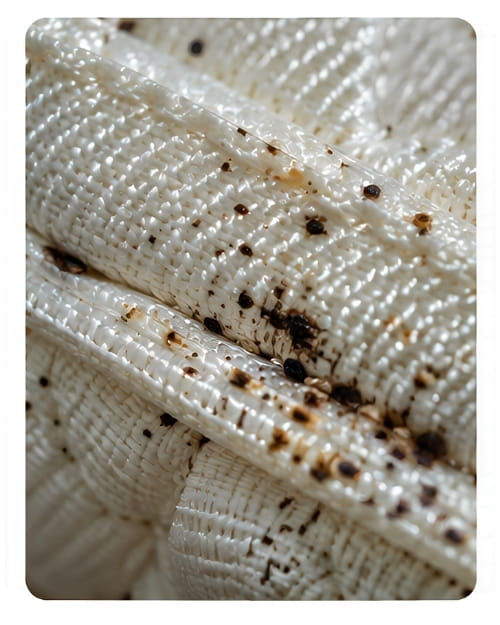
Bed bug faecal marks often appear as small dark brown or black spots around areas where the insects hide.
Common places include:
Mattress seams
Bed frames
Headboards
Skirting boards
Furniture joints
Cracks and crevices
Blood spots
Small blood marks can sometimes appear on sheets, pillowcases or other bedding. These may occur after a bed bug has fed, although blood spots alone are not enough to confirm an infestation.
Eggs and shed skins
Eggs, empty egg cases and cast skins may build up around established harbourage areas, particularly where bed bugs have been active for some time.
Bed bug bites
Some people develop red, itchy marks after being bitten, while others show little or no visible reaction.
Bites alone cannot reliably confirm a bed bug infestation.
Bite reactions vary significantly between individuals and can resemble bites or irritation caused by other insects and conditions.
Where should you look for bed bugs?
Bed bugs tend to hide in narrow, protected areas close to where people rest or sleep.
Check carefully around:
Mattress seams, piping and labels
Bed frames and joints
Headboards
Divan bases
Bedside furniture
Sofas and upholstered furniture
Skirting boards
Cracks and crevices
As an infestation develops, bed bugs may spread further away from the bed and into surrounding furniture and structural gaps.
Bed bugs before and after feeding
The appearance of a bed bug can change noticeably after it has taken a blood meal.
Before feeding
An unfed adult bed bug is typically:
Flat
Broad and oval
Brown to reddish-brown
After feeding
After feeding, the abdomen fills with blood and the insect may appear:
More elongated
Fuller or swollen
Darker red or reddish-brown
More rounded through the abdomen
This change in shape and colour is one reason bed bugs can sometimes be difficult to identify from photographs alone.
Bed bugs through their lifecycle
Bed bugs develop through three main stages:
Egg → Nymph → Adult
After hatching, a bed bug passes through several nymph stages before becoming an adult. During this process it grows larger and gradually becomes darker in colour.
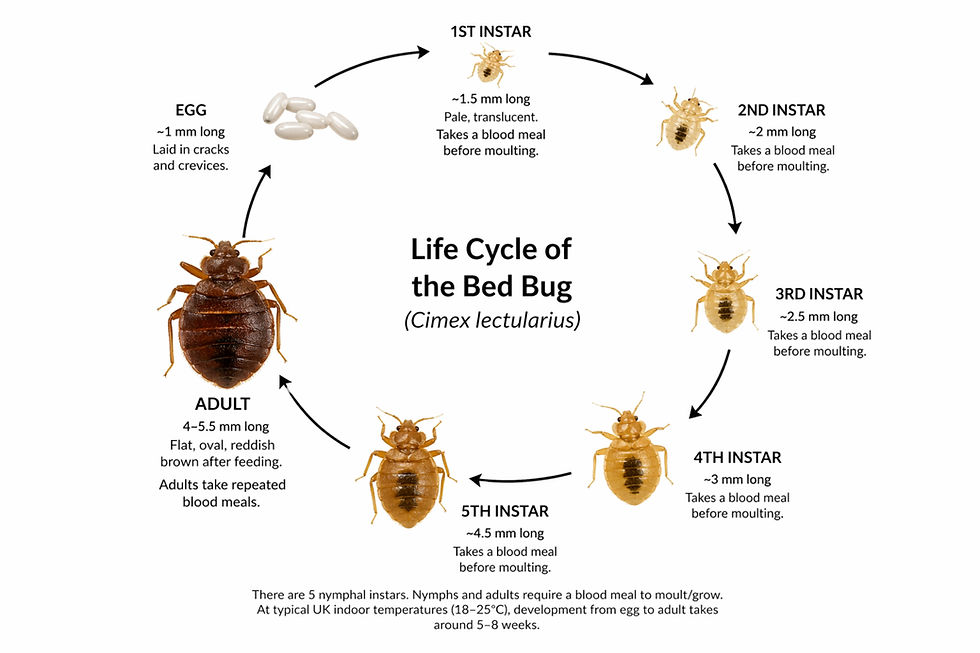
The different life stages can look noticeably different, particularly when comparing a pale young nymph with a mature reddish-brown adult.
What insects are commonly mistaken for bed bugs?
Several small household insects can be confused with bed bugs, especially when identification is based only on size or colour.
Carpet beetle larvae and their shed skins are sometimes mistaken for bed bugs. Larvae are usually hairy or bristled, unlike the smooth, flat body of a bed bug.
Fleas are small, dark insects that also feed on blood, but their bodies are shaped differently and they are capable of jumping.
Booklice
Booklice are very small and usually much paler than adult bed bugs. They are commonly associated with damp or humid conditions rather than blood feeding.
Spider beetles
Some spider beetles have rounded brown bodies and may be confused with bed bugs at first glance, although their body shape and longer legs are noticeably different on closer inspection.
Bat bugs
Bat bugs are very closely related to bed bugs and can look extremely similar. Distinguishing between them may require close examination of fine physical features.
Other small insects, including cockroach nymphs and some mites, may also occasionally be mistaken for bed bugs.
Bed bugs vs fleas
Bed bugs and fleas both feed on blood and can cause unexplained bites, but there are several important differences.
Feature | Bed bugs | Fleas |
Shape | Broad, flat and oval | Narrower from side to side |
Movement | Crawl | Jump |
Adult size | Around 4–7 mm | Usually smaller |
Typical location | Beds, furniture and harbourage areas | Animals, pet bedding and carpets |
Wings | None | None |
Movement is often one of the easiest differences to notice: bed bugs crawl, while fleas are capable of jumping considerable distances relative to their size.
Are bed bugs always found on beds?
No.
Beds are common harbourage areas because they place bed bugs close to a sleeping host, but they are not restricted to mattresses or bed frames.
Established infestations may also be found around:
Sofas and upholstered furniture
Bedside furniture
Skirting boards
Cracks and structural gaps
Wall fittings
Adjacent rooms
The more established an infestation becomes, the further bed bugs may spread from the original harbourage area.
Can you see bed bugs with the naked eye?
Adult bed bugs can usually be seen without magnification.
At around 4–7 mm long, mature bed bugs are large enough to see with the naked eye when they are exposed.
Young nymphs are much smaller and paler, while eggs are only around 1 mm long, making both much more difficult to spot without careful inspection.
The greater challenge is often not their size, but their ability to hide deep inside cracks, seams and furniture joints.
Does finding one bed bug mean you have an infestation?
Finding a single bed bug should not be ignored, but the number of insects you can see does not necessarily indicate the size of the problem.
Most bed bugs remain hidden within harbourage areas, so a professional inspection looks for wider evidence of activity, including:
Adult bed bugs and nymphs
Eggs
Faecal spotting
Cast skins
Established harbourage areas
Activity in adjoining rooms
A detailed inspection can help determine whether the insect is a bed bug and how far any activity may have spread.
When should you arrange a professional bed bug inspection?
Professional identification is worth considering if:
You find a suspected live bed bug
You repeatedly wake with unexplained bites
You discover dark spotting or cast skins
Bed bugs have been reported in adjoining accommodation
You have recently stayed somewhere with confirmed bed bug activity
DIY treatment has failed to resolve the problem
Early identification can make it easier to determine the extent of the infestation and select the most appropriate treatment.
Think you've found a bed bug?
Not sure what you’ve found? Contact and send PGM a clear photo or speak to our BPCA-accredited team. We can help identify the pest and advise you on the best next step — no pressure, no obligation, just expert advice. Call us on 01981 540088.
Frequently asked questions
How can I tell if an insect is a bed bug?
Adult bed bugs are usually 4–7 mm long, flat, oval and reddish-brown with six legs and no wings. Identification should also consider where the insect was found and whether there are other signs such as faecal spotting, eggs or cast skins.
Can you see bed bugs with the naked eye?
Yes. Adult bed bugs are normally visible without magnification, although young nymphs and eggs can be much harder to see.
What colour are bed bugs?
Adult bed bugs are generally brown to reddish-brown. After feeding, they may appear darker and redder as the abdomen fills with blood.
How small are baby bed bugs?
Newly hatched nymphs are much smaller than adults and can be very difficult to spot. They gradually increase in size as they pass through their developmental stages,
What do bed bug eggs look like?
Bed bug eggs are approximately 1 mm long, pearly white to off-white and oval or slightly elongated in shape.
What insects are commonly mistaken for bed bugs?
Carpet beetles, fleas, booklice, spider beetles and bat bugs are among the insects that can sometimes be confused with bed bugs.
Can bed bug bites confirm an infestation?
No. Bites alone cannot reliably confirm bed bug activity. Reactions vary between people and can resemble irritation caused by many other insects or skin conditions.